
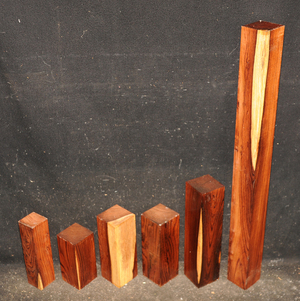
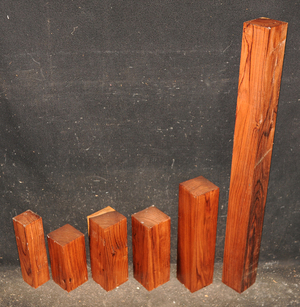
Honduras Rosewood Turning Squares
Dalbergia stevensonii
A true rosewood, most of our stock comes from Belize. Smelling like stored apples, it is a lovely wood to turn and takes a fantastic polish. Getting scarce on the world market.
Due to CITES regulations, we can only ship this species to customers in the United States.
Item Number: W44530
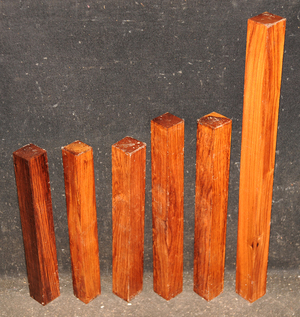
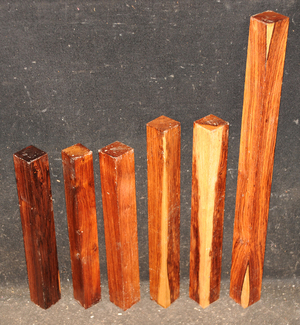
Honduras Rosewood Turning Squares
Dalbergia stevensonii
A true rosewood, most of our stock comes from Belize. Smelling like stored apples, it is a lovely wood to turn and takes a fantastic polish. Getting scarce on the world market.
Due to CITES regulations, we can only ship this species to customers in the United States.
Item Number: W44529
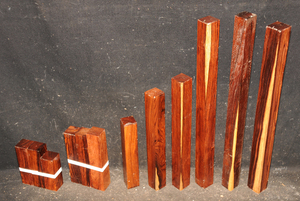
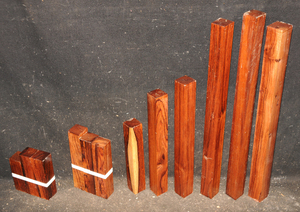
Honduras Rosewood Bundles & Turning Squares
Dalbergia stevensonii
A true rosewood, most of our stock comes from Belize. Smelling like stored apples, it is a lovely wood to turn and takes a fantastic polish. Getting scarce on the world market.
Due to CITES regulations, we can only ship this species to customers in the United States.
A has 3 pieces.
B has 3 pieces.
Item Number: W44528
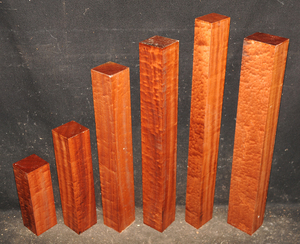
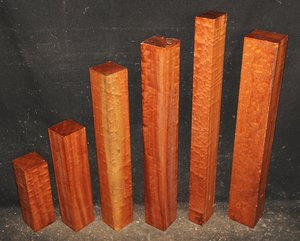
Pomelle Sapele Turning Squares & Blocks
Entandrophragma cylindricum
The Sapele tree is found in tropical West & Central Africa. Even when without figure as this board Sapele has an amazing luster and takes a beautiful polish.
Item Number: W44527
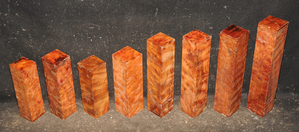
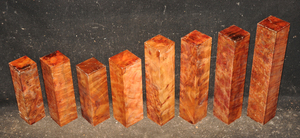
Camphor Burl Turning Squares
Cinnamomum sp.
This rare burl is from S.E. Asia and is seldom seen on the world market. It is fine-grained and varies in color from a light reddish-brown to almost scarlet. It is easy to work and has a very pungent, spicy scent. For a burl it is remarkably stable. Green to partially air dried.
Item Number: W44526
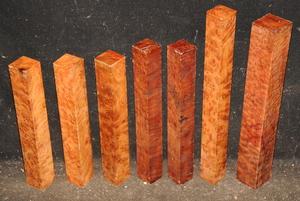
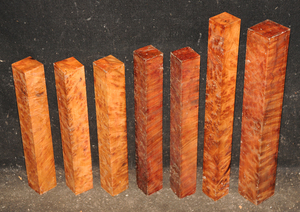
Camphor Burl Turning Squares
Cinnamomum sp.
This rare burl is from S.E. Asia and is seldom seen on the world market. It is fine-grained and varies in color from a light reddish-brown to almost scarlet. It is easy to work and has a very pungent, spicy scent. For a burl it is remarkably stable. Green to partially air dried.
Item Number: W44525
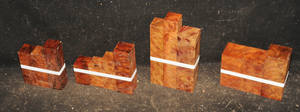
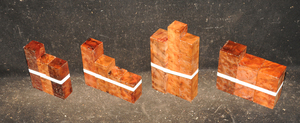
Camphor Burl Turning Squares Bundle
Cinnamomum sp.
This rare burl is from S.E. Asia and is seldom seen on the world market. It is fine-grained and varies in color from a light reddish-brown to almost scarlet. It is easy to work and has a very pungent, spicy scent. For a burl it is remarkably stable. Green to partially air dried.
A has 3 pieces.
B has 4 pieces.
C has 3 pieces.
D has 3 pieces.
Item Number: W44524
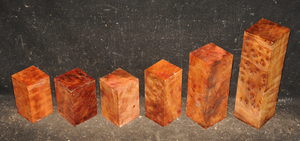
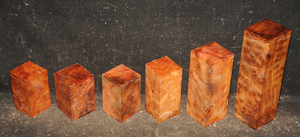
Camphor Burl Turning Squares
Cinnamomum sp.
This rare burl is from S.E. Asia and is seldom seen on the world market. It is fine-grained and varies in color from a light reddish-brown to almost scarlet. It is easy to work and has a very pungent, spicy scent. For a burl it is remarkably stable. Green to partially air dried.
Item Number: W44523
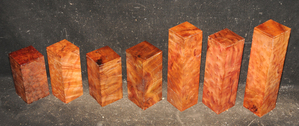
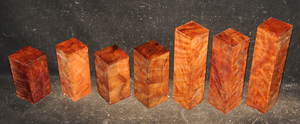
Camphor Burl Turning Squares
Cinnamomum sp.
This rare burl is from S.E. Asia and is seldom seen on the world market. It is fine-grained and varies in color from a light reddish-brown to almost scarlet. It is easy to work and has a very pungent, spicy scent. For a burl it is remarkably stable. Green to partially air dried.
Item Number: W44522
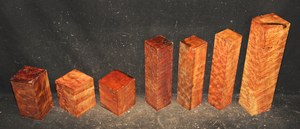
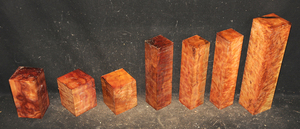
Camphor Burl Turning Squares
Cinnamomum sp.
This rare burl is from S.E. Asia and is seldom seen on the world market. It is fine-grained and varies in color from a light reddish-brown to almost scarlet. It is easy to work and has a very pungent, spicy scent. For a burl it is remarkably stable. Green to partially air dried.
Item Number: W44521
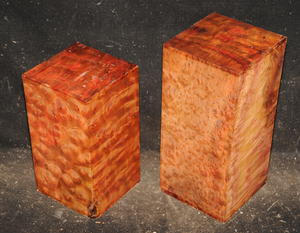
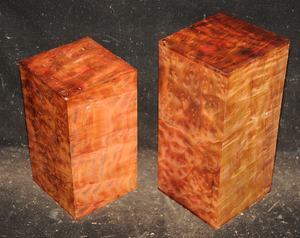
Camphor Burl Turning Squares
Cinnamomum sp.
This rare burl is from S.E. Asia and is seldom seen on the world market. It is fine-grained and varies in color from a light reddish-brown to almost scarlet. It is easy to work and has a very pungent, spicy scent. For a burl it is remarkably stable. Green to partially air dried.
Item Number: W44520
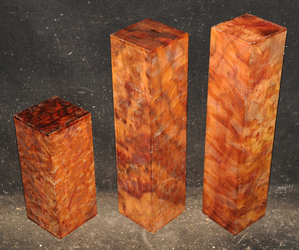
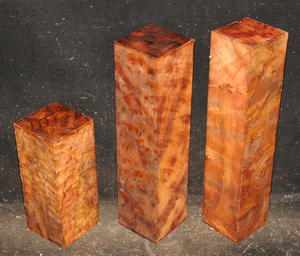
Camphor Burl Turning Squares
Cinnamomum sp.
This rare burl is from S.E. Asia and is seldom seen on the world market. It is fine-grained and varies in color from a light reddish-brown to almost scarlet. It is easy to work and has a very pungent, spicy scent. For a burl it is remarkably stable. Green to partially air dried.
Item Number: W44519


Masur Birch Turning Squares
Betula alba
Also called Alpine Burl or Karelian Burl after the Finnish province of Karelia where it is often found. The high figure found in this wood is caused when the tree heals the damage done by an invasive boring beetle. The beetle infestation leaves the trees stunted and sometimes deformed but produces wood with small twists and swirls that highlight the darker, burly figure. Rare.
These all have boxed heart. That means the heart of the tree runs down the center of the square.
Item Number: W44502


Masur Birch Turning Squares
Betula alba
Also called Alpine Burl or Karelian Burl after the Finnish province of Karelia where it is often found. The high figure found in this wood is caused when the tree heals the damage done by an invasive boring beetle. The beetle infestation leaves the trees stunted and sometimes deformed but produces wood with small twists and swirls that highlight the darker, burly figure. Rare.
E & F are very plain.
Item Number: W44501


Pomelle Figured Bubinga Turning Squares/Pool Cue Blanks
Guibourtia tessmannii
Called by some woodworkers African Rosewood, Bubinga is a deep, lustrous, brownish-red color with a fine, darker striping. The figure makes the wood doubly beautiful. It is very hard and heavy and takes a glassy, smooth finish.
Due to CITES regulations, we can only ship this species to customers in the United States.
For Nearly 50 years, I have bought or inspected many thousands of tonnes of Bubinga. The figure in the log these squares are from is some of the best I have seen. One of a kind. These squares are highly figured on all four sides. The are well seasoned and stable. I bought these boards in the 1990's.
These all have a few small pin holes. They are also all highly figured. Any disparity in the photographs is just due to the difficulty in photographing the squares so the figure shows up. They were all cut from the same board and all are absolutely fantastic pieces of wood.
A is about half sapwood. It has a few more pin holes than the other pieces.
Item Number: W44499


Pomelle Figured Bubinga Turning Squares/Pool Cue Blanks
Guibourtia tessmannii
Called by some woodworkers African Rosewood, Bubinga is a deep, lustrous, brownish-red color with a fine, darker striping. The figure makes the wood doubly beautiful. It is very hard and heavy and takes a glassy, smooth finish.
Due to CITES regulations, we can only ship this species to customers in the United States.
For Nearly 50 years, I have bought or inspected many thousands of tonnes of Bubinga. The figure in the log these squares are from is some of the best I have seen. One of a kind. These squares are highly figured on all four sides. The are well seasoned and stable. I bought these boards in the 1990's.
These all have a few small pin holes. They are also all highly figured. Any disparity in the photographs is just due to the difficulty in photographing the squares so the figure shows up. They were all cut from the same board and all are absolutely fantastic pieces of wood.
Item Number: W44498
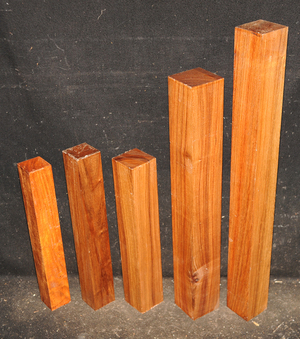
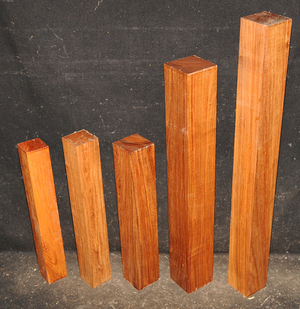
Narra Turning Squares
Pterocarpus indicus
Also called New Guinea Rosewood. It is a beautiful, highly lustrous golden yellow color sometimes with reddish streaks. A nice turning wood it is also used in furniture, jewelry boxes, handles, etc. It is easy to work and glue and takes a nice polish.
Item Number: W44487
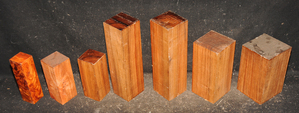
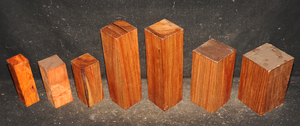
Narra Turning Squares
Pterocarpus indicus
Also called New Guinea Rosewood. It is a beautiful, highly lustrous golden yellow color sometimes with reddish streaks. A nice turning wood it is also used in furniture, jewelry boxes, handles, etc. It is easy to work and glue and takes a nice polish.
Item Number: W44486
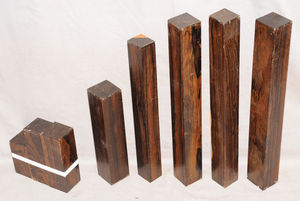
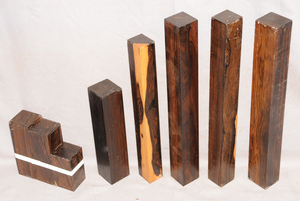
Ziricote Bundle & Blocks
Cordia dodecandra
Ziricote is another timber we get from the Yucatan Peninsula of Mexico. It is a lovely wood with a very pronounced ray fleck on radial surfaces sometimes producing a "landscape" effect much like picture jasper.
A has 3 pieces.
Item Number: W44485
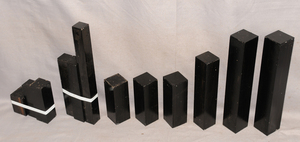
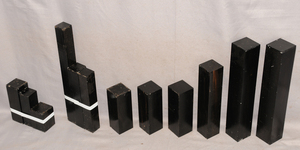
West African Ebony Bundles & Turning Squares
Diospyros crassiflora
Sometimes called Gabon or Gaboon, this Ebony is sometimes jet black but oftentimes has grayish streaks that mostly disappear when finished or after the made object has been put into service. This Ebony has a marked resistance to checking that is characteristic of some of the Indian and Asian species. It has a wonderful texture and is easily carved, planed, turned, and milled. It is fairly fine-grained and takes a high polish. This Ebony usually originates in either Cameroon or Nigeria and the logs are rough hewn in the forest and oftentimes brought to the nearest road by human porters. With the disappearance of other species of black Ebony this species is fast becoming the Ebony of choice.
A & B have 3 pieces each.
Item Number: W44479
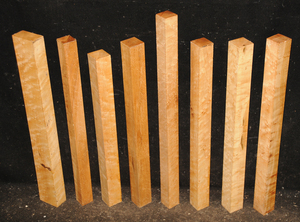
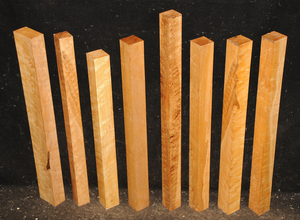
Bird's-eye Maple Block & Turning Squares
Acer saccharum
The heartwood is white or cream to light brown or reddish brown. Figured somewhat like that of burl with many small eyes separate from each other. Hard and heavy, 45 lbs/cu ft. Easy to work and takes a smooth polish. U.S.A.
Item Number: W44478
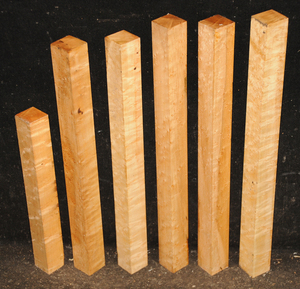
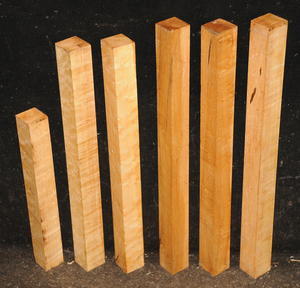
Bird's-eye Maple Turning Squares
Acer saccharum
The heartwood is white or cream to light brown or reddish brown. Figured somewhat like that of burl with many small eyes separate from each other. Hard and heavy, 45 lbs/cu ft. Easy to work and takes a smooth polish. U.S.A.
Item Number: W44477
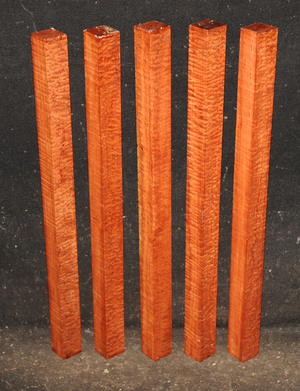
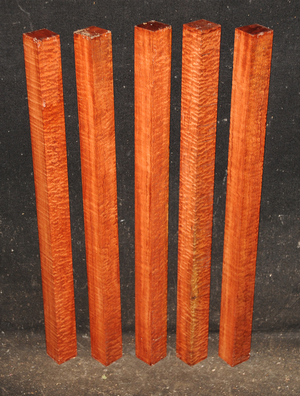
Pomelle Figured Bubinga Turning Squares/Pool Cue Blanks
Guibourtia tessmannii
Called by some woodworkers African Rosewood, Bubinga is a deep, lustrous, brownish-red color with a fine, darker striping. The figure makes the wood doubly beautiful. It is very hard and heavy and takes a glassy, smooth finish.
Due to CITES regulations, we can only ship this species to customers in the United States.
For Nearly 50 years, I have bought or inspected many thousands of tonnes of Bubinga. The figure in the log these squares are from is some of the best I have seen. One of a kind. These squares are highly figured on all four sides. The are well seasoned and stable. I bought these boards in the 1990's.
C. D. and E all have a couple small pin holes.
Item Number: W44461
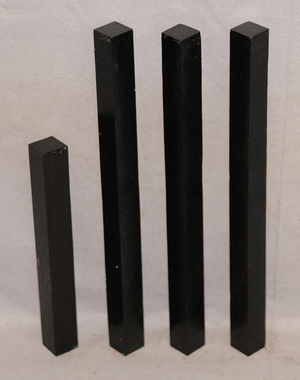
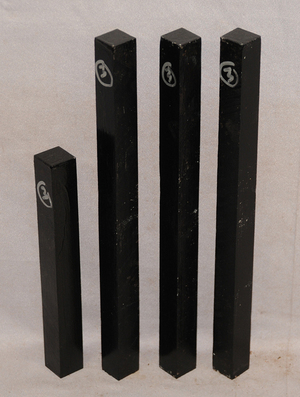
Malagasy Ebony Turning Squares
Diospyros perreiri
This Ebony is unsurpassed for its beauty and blackness. It is fairly fine-textured and takes a high polish. Finest ebony in the world. Rare.
This species is on the CITES list and as a consequence, we are limiting sales to the United States only.
Item Number: W44459
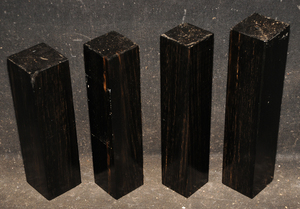
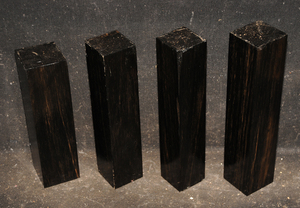
West African Ebony Turning Squares
Diospyros crassiflora
Sometimes called Gabon or Gaboon, this Ebony is sometimes jet black but oftentimes has grayish streaks that mostly disappear when finished or after the made object has been put into service. This Ebony has a marked resistance to checking that is characteristic of some of the Indian and Asian species. It has a wonderful texture and is easily carved, planed, turned, and milled. It is fairly fine-grained and takes a high polish. This Ebony usually originates in either Cameroon or Nigeria and the logs are rough hewn in the forest and oftentimes brought to the nearest road by human porters. With the disappearance of other species of black Ebony this species is fast becoming the Ebony of choice.
Item Number: W44449
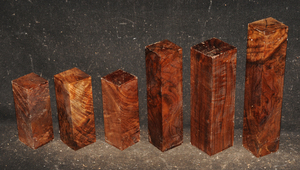
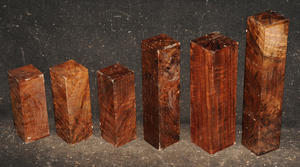
Figured Claro Walnut Turning Squares
Juglans hindsii
A tree found in Southern Oregon and Northern California with the best material coming from the San Joaquin Valley. Lighter in color than Eastern Black Walnut (Juglans regia) it is often found with curly and quilted figure. Burly stumps are also a valuable source of wood for veneers, gunstocks, and wood turning blanks.
Item Number: W44424
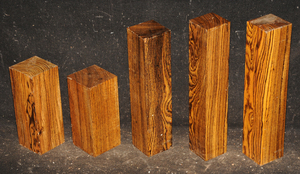
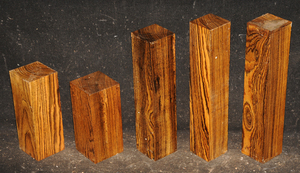
Mexican Bocote Turning Squares
Cordia elaeagnoides
Bocote is an oily wood with a yellowish to dark brown color accented with irregular black stripes and streaks. It has a spicy smell and is hard, heavy and strong. It is easy to work and takes a very nice polish. This beautiful wood is seldom seen in woodworker's shops.
Item Number: W44422
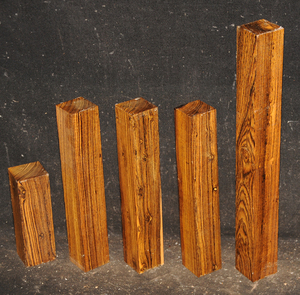
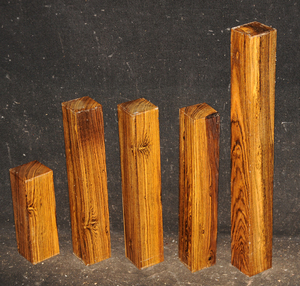
Mexican Bocote Turning Squares
Cordia elaeagnoides
Bocote is an oily wood with a yellowish to dark brown color accented with irregular black stripes and streaks. It has a spicy smell and is hard, heavy and strong. It is easy to work and takes a very nice polish. This beautiful wood is seldom seen in woodworker's shops.
Item Number: W44421
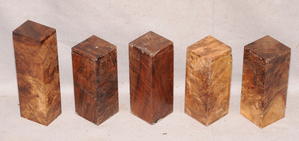
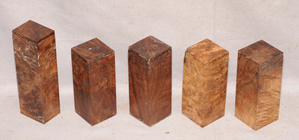
Figured Claro Walnut Turning Squares/Knife Handle Blanks
Juglans hindsii
A tree found in Southern Oregon and Northern California with the best material coming from the San Joaquin Valley. Lighter in color than Eastern Black Walnut (Juglans regia) it is often found with curly and quilted figure. Burly stumps are also a valuable source of wood for veneers, gunstocks, and wood turning blanks.
Item Number: W44410
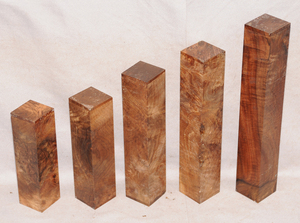
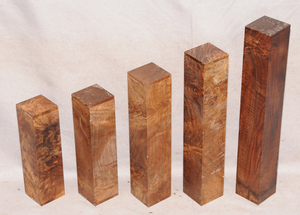
Figured Claro Walnut Turning Squares
Juglans hindsii
A tree found in Southern Oregon and Northern California with the best material coming from the San Joaquin Valley. Lighter in color than Eastern Black Walnut (Juglans regia) it is often found with curly and quilted figure. Burly stumps are also a valuable source of wood for veneers, gunstocks, and wood turning blanks.
Item Number: W44409
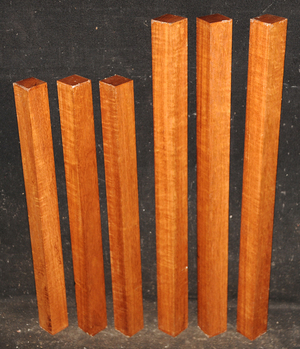
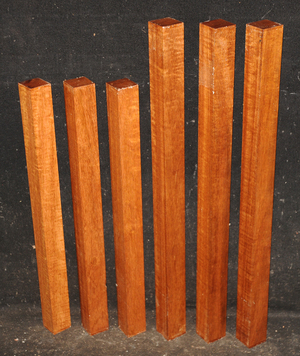
Figured Knobthorn Acacia Turning Squares
Acacia nigrescens
This South African tree is noted for its bark which has prominent knobby prickles. The heartwood is medium to dark brown and close grained. It is hard and heavy and takes a nice polish. Rare on the American market.
Item Number: W44390
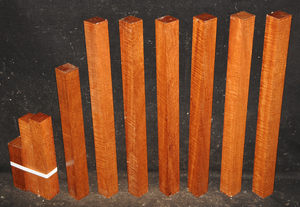
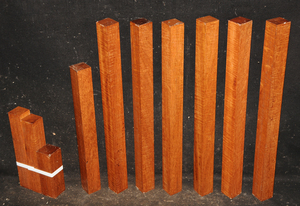
Figured Knobthorn Acacia Bundle & Turning Squares
Acacia nigrescens
This South African tree is noted for its bark which has prominent knobby prickles. The heartwood is medium to dark brown and close grained. It is hard and heavy and takes a nice polish. Rare on the American market.
A has 3 pieces.
Item Number: W44389
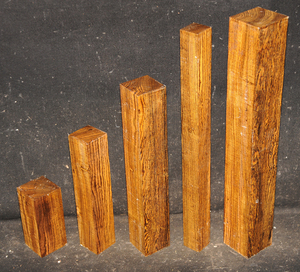
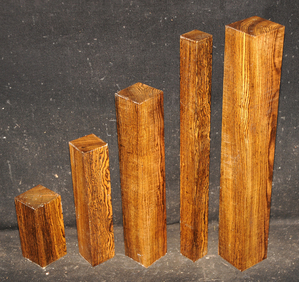
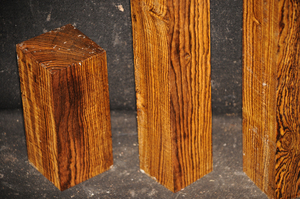
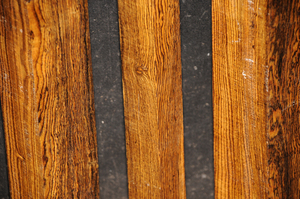
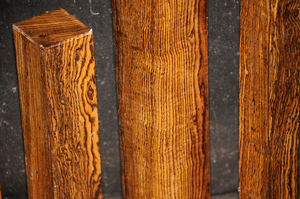
Curly Mexican Bocote Turning Squares
Cordia elaeagnoides
Bocote is an oily wood with a yellowish to dark brown color accented with irregular black stripes and streaks. It has a spicy smell and is hard, heavy and strong. It is easy to work and takes a very nice polish. This beautiful wood is seldom seen in woodworker's shops.
These all have a curly figure, which is extremely rare in this species. It shows up as a very tight, fiddleback figute on the quartersawn faces. The figure can be subtle but still very cool looking .
Item Number: W44384
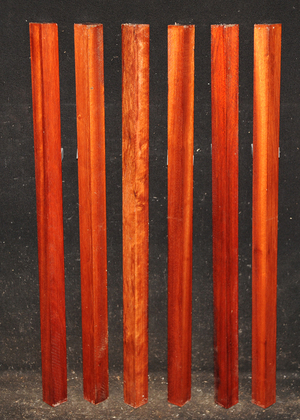
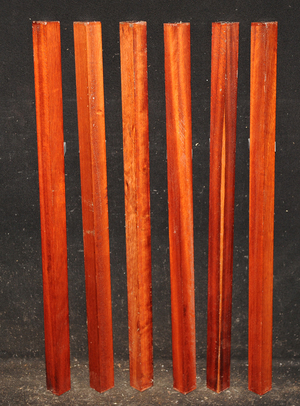
Brazilian Bloodwood Turning Squares/Pool Cue Blanks
Brosimum paraense
Also called Satine, Cacique, and Cardinalwood. The heartwood is a rich strawberry red, in sharp contrast to the light colored sapwood. Takes a high, lustrous finish.
Item Number: W44364
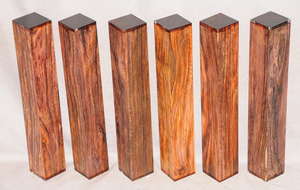
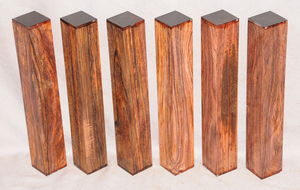
Mexican Cocobolo Turning Squares
Dalbergia retusa
The wood is very oily which makes it difficult to glue but on the plus side the oiliness makes it easy to produce a fantastic polish on finished pieces. Wear a respirator mask when working Cocobolo as the dust can produce asthma-like reactions. Cocobolo is a small to medium sized tree and is found mainly in Mexico, Costa Rica, Nicaragua, and Panama.
Due to CITES regulations, we can only ship this species to customers in the United States.
Item Number: W44363
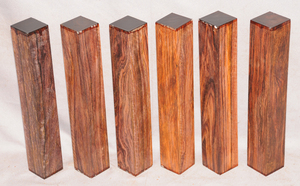
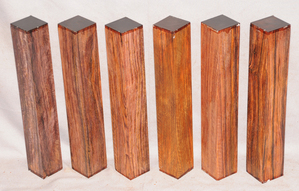
Mexican Cocobolo Turning Squares
Dalbergia retusa
The wood is very oily which makes it difficult to glue but on the plus side the oiliness makes it easy to produce a fantastic polish on finished pieces. Wear a respirator mask when working Cocobolo as the dust can produce asthma-like reactions. Cocobolo is a small to medium sized tree and is found mainly in Mexico, Costa Rica, Nicaragua, and Panama.
Due to CITES regulations, we can only ship this species to customers in the United States.
Item Number: W44362
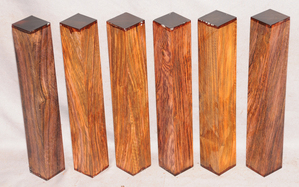
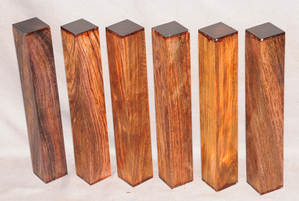
Mexican Cocobolo Turning Squares
Dalbergia retusa
The wood is very oily which makes it difficult to glue but on the plus side the oiliness makes it easy to produce a fantastic polish on finished pieces. Wear a respirator mask when working Cocobolo as the dust can produce asthma-like reactions. Cocobolo is a small to medium sized tree and is found mainly in Mexico, Costa Rica, Nicaragua, and Panama.
Due to CITES regulations, we can only ship this species to customers in the United States.
Item Number: W44361
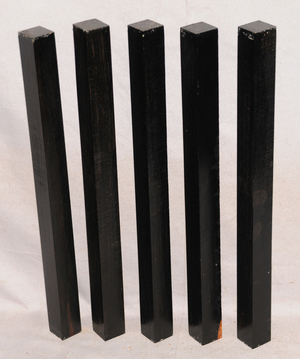
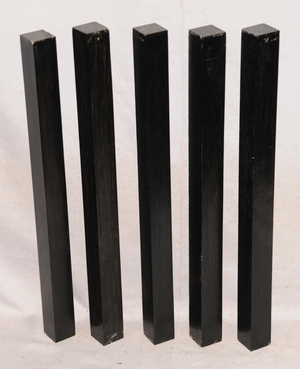
West African Ebony Turning Squares
Diospyros crassiflora
Sometimes called Gabon or Gaboon, this Ebony is sometimes jet black but oftentimes has grayish streaks that mostly disappear when finished or after the made object has been put into service. This Ebony has a marked resistance to checking that is characteristic of some of the Indian and Asian species. It has a wonderful texture and is easily carved, planed, turned, and milled. It is fairly fine-grained and takes a high polish. This Ebony usually originates in either Cameroon or Nigeria and the logs are rough hewn in the forest and oftentimes brought to the nearest road by human porters. With the disappearance of other species of black Ebony this species is fast becoming the Ebony of choice.
Item Number: W44360
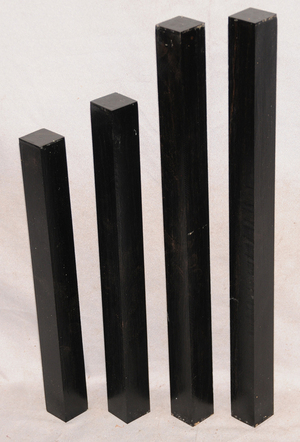
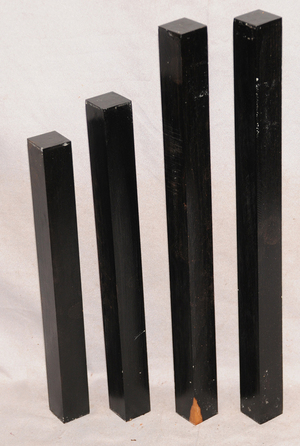
West African Ebony Turning Squares
Diospyros crassiflora
Sometimes called Gabon or Gaboon, this Ebony is sometimes jet black but oftentimes has grayish streaks that mostly disappear when finished or after the made object has been put into service. This Ebony has a marked resistance to checking that is characteristic of some of the Indian and Asian species. It has a wonderful texture and is easily carved, planed, turned, and milled. It is fairly fine-grained and takes a high polish. This Ebony usually originates in either Cameroon or Nigeria and the logs are rough hewn in the forest and oftentimes brought to the nearest road by human porters. With the disappearance of other species of black Ebony this species is fast becoming the Ebony of choice.
Item Number: W44359
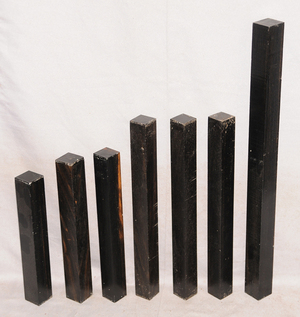
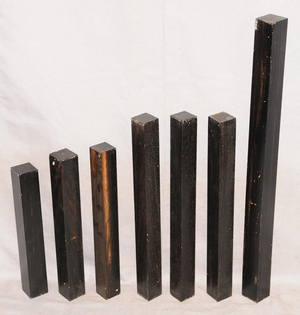
West African Ebony Turning Squares
Diospyros crassiflora
Sometimes called Gabon or Gaboon, this Ebony is sometimes jet black but oftentimes has grayish streaks that mostly disappear when finished or after the made object has been put into service. This Ebony has a marked resistance to checking that is characteristic of some of the Indian and Asian species. It has a wonderful texture and is easily carved, planed, turned, and milled. It is fairly fine-grained and takes a high polish. This Ebony usually originates in either Cameroon or Nigeria and the logs are rough hewn in the forest and oftentimes brought to the nearest road by human porters. With the disappearance of other species of black Ebony this species is fast becoming the Ebony of choice.
Item Number: W44358
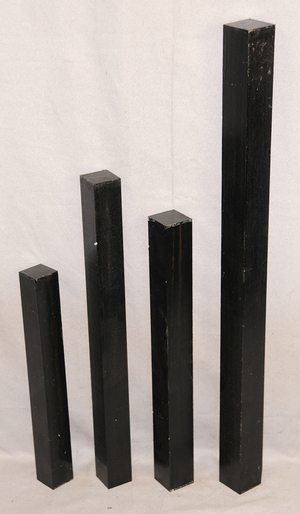
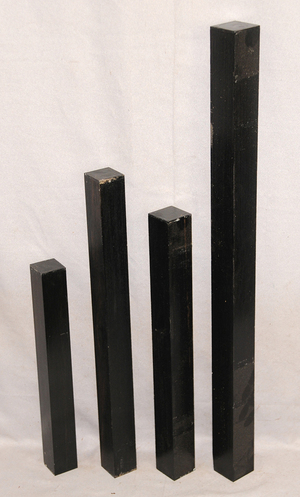
West African Ebony Turning Squares
Diospyros crassiflora
Sometimes called Gabon or Gaboon, this Ebony is sometimes jet black but oftentimes has grayish streaks that mostly disappear when finished or after the made object has been put into service. This Ebony has a marked resistance to checking that is characteristic of some of the Indian and Asian species. It has a wonderful texture and is easily carved, planed, turned, and milled. It is fairly fine-grained and takes a high polish. This Ebony usually originates in either Cameroon or Nigeria and the logs are rough hewn in the forest and oftentimes brought to the nearest road by human porters. With the disappearance of other species of black Ebony this species is fast becoming the Ebony of choice.
Item Number: W44357
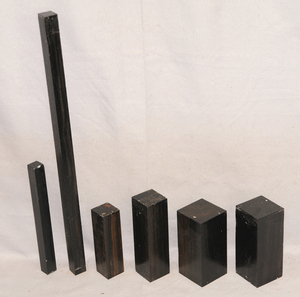
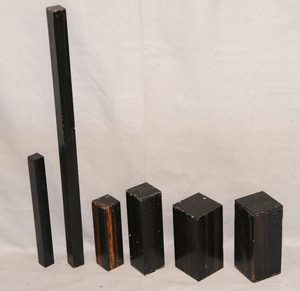
West African Ebony Turning Squares
Diospyros crassiflora
Sometimes called Gabon or Gaboon, this Ebony is sometimes jet black but oftentimes has grayish streaks that mostly disappear when finished or after the made object has been put into service. This Ebony has a marked resistance to checking that is characteristic of some of the Indian and Asian species. It has a wonderful texture and is easily carved, planed, turned, and milled. It is fairly fine-grained and takes a high polish. This Ebony usually originates in either Cameroon or Nigeria and the logs are rough hewn in the forest and oftentimes brought to the nearest road by human porters. With the disappearance of other species of black Ebony this species is fast becoming the Ebony of choice.
Item Number: W44356
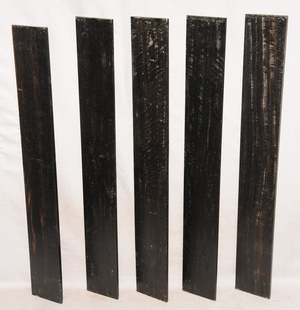
Figured West African Ebony Thins
Diospyros crassiflora
Sometimes called Gabon or Gaboon, this Ebony is sometimes jet black but oftentimes has grayish streaks that mostly disappear when finished or after the made object has been put into service. This Ebony has a marked resistance to checking that is characteristic of some of the Indian and Asian species. It has a wonderful texture and is easily carved, planed, turned, and milled. It is fairly fine-grained and takes a high polish. This Ebony usually originates in either Cameroon or Nigeria and the logs are rough hewn in the forest and oftentimes brought to the nearest road by human porters. With the disappearance of other species of black Ebony this species is fast becoming the Ebony of choice.
All of these Ebony thins have some figure to them.
Item Number: W44351
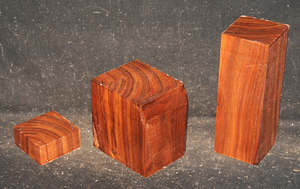
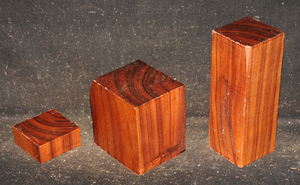
Hawaiian Koa Turning Blanks
Acacia Koa
This species is found almost exclusively in the Hawaiian Islands. It ranges in color from a pale brown to a reddish brown to a very dark, almost chocolate brown. It has a texture similar to Walnut but is easier to work. Can be highly chatoyant or lustrous. Highly sought after for use in musical instruments, especially guitars and ukuleles. Koa is becoming rare.
B has a little corner that some some bug damage.
C has a small area on one face that is a little punky, though it doesn't appear to go in very far.
Item Number: W44330
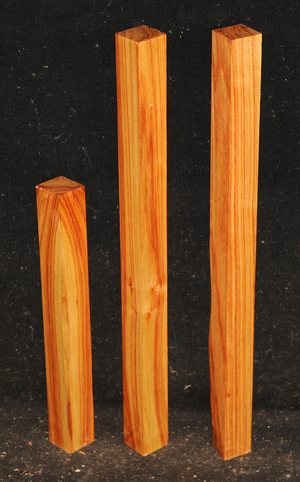
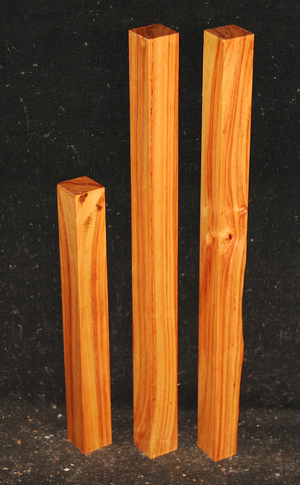
Brazilian Tulipwood Turning Squares/Pool Cue Blanks
Dalbergia decipularis
This beautiful member of the Rosewood family is getting scarce on the world's market. Traditionally used for decorative furniture bandings and inlays. When worked it has a delicate, sweet aroma. Takes a high polish.
Due to CITES regulations, we can only ship this species to customers in the United States.
Item Number: W44329
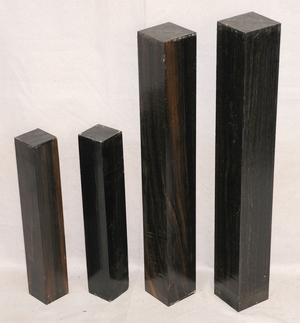
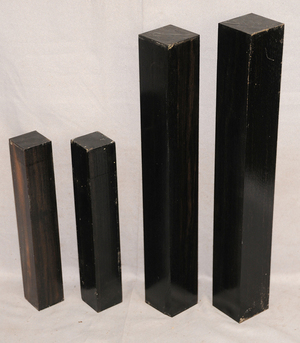
West African Ebony Turning Squares
Diospyros crassiflora
Sometimes called Gabon or Gaboon, this Ebony is sometimes jet black but oftentimes has grayish streaks that mostly disappear when finished or after the made object has been put into service. This Ebony has a marked resistance to checking that is characteristic of some of the Indian and Asian species. It has a wonderful texture and is easily carved, planed, turned, and milled. It is fairly fine-grained and takes a high polish. This Ebony usually originates in either Cameroon or Nigeria and the logs are rough hewn in the forest and oftentimes brought to the nearest road by human porters. With the disappearance of other species of black Ebony this species is fast becoming the Ebony of choice.
Item Number: W44327
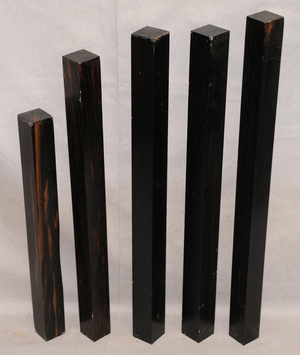
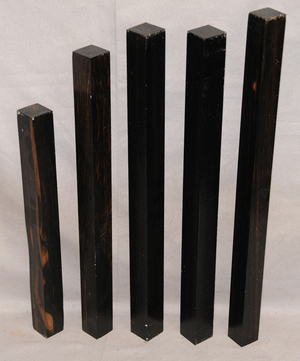
West African Ebony Turning Squares/Pool Cue Blanks
Diospyros crassiflora
Sometimes called Gabon or Gaboon, this Ebony is sometimes jet black but oftentimes has grayish streaks that mostly disappear when finished or after the made object has been put into service. This Ebony has a marked resistance to checking that is characteristic of some of the Indian and Asian species. It has a wonderful texture and is easily carved, planed, turned, and milled. It is fairly fine-grained and takes a high polish. This Ebony usually originates in either Cameroon or Nigeria and the logs are rough hewn in the forest and oftentimes brought to the nearest road by human porters. With the disappearance of other species of black Ebony this species is fast becoming the Ebony of choice.
Item Number: W44300
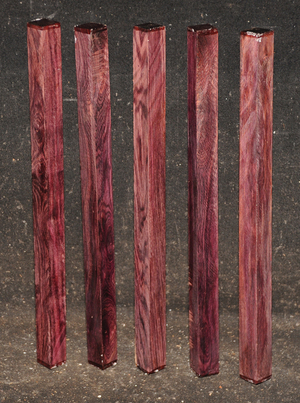
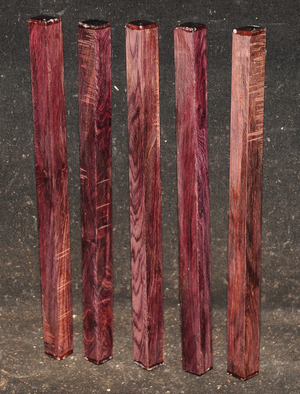
Camatillo Turning Squares/Wand Blanks
Dalbergia congestiflora
Also called Para Kingwood & Mexican Kingwood. The deep purple heartwood is oily and takes an incredible polish with a smoothness pleasing to the fingertips.
Due to CITES regulations, we can only ship this species to customers in the United States.
Item Number: W44299
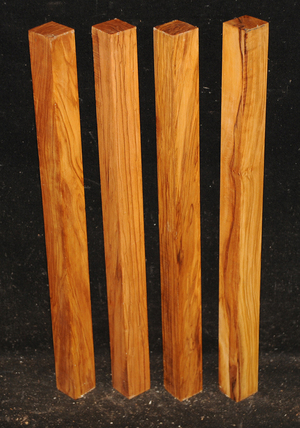
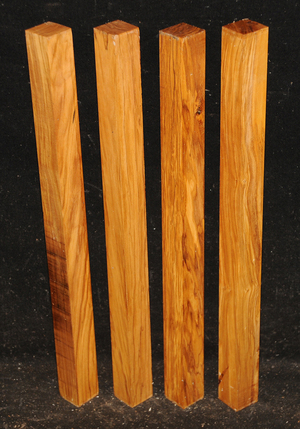
Mediterranean Olivewood Turning Squares/Pool Cue Blanks
Olea europa
A wood of biblical importance, no wood is more closely associated with history and the development of civilization than Olivewood. A beautifully variegated timber. Partially air-dried.
Item Number: W44297
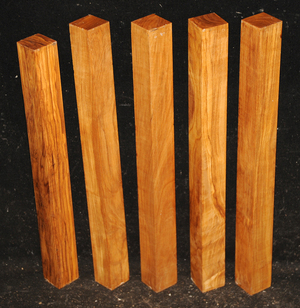
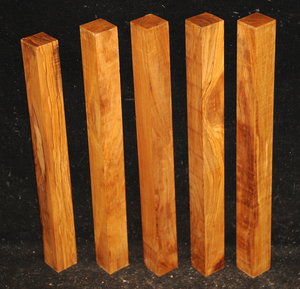
Mediterranean Olivewood Turning Squares/Pool Cue Blanks
Olea europa
A wood of biblical importance, no wood is more closely associated with history and the development of civilization than Olivewood. A beautifully variegated timber. Partially air-dried.
Item Number: W44296