

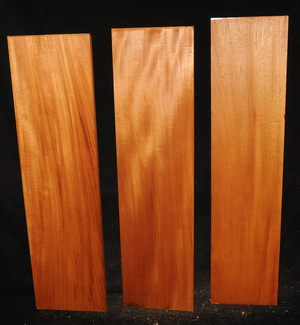
Genuine Mahogany
Swietenia macrophylla
Also called Acajou, Tropical American Mahogany, and Honduras Mahogany. This medium to large tree occurs throughout Central and South America. Related to Cuban Mahogany (Swietenia mahogani) and Pacific Coast Mahogany (Swietenia humilis). It produces one of the classic furniture and cabinetmaking woods. The heartwood varies from a light reddish-brown to a rich, dark red. Generally straight grained and exceptionally stable, it is easy to machine, hand plane, sand and finish. Occasional logs produce several figures, curly, quilted, and the rare plum pudding figure which looks like large drips running down the board. Used in fine furniture and joinery, boat building, and in the guitar industry for acoustic sets and necks.
Due to CITES regulations, we can only ship this species to customers in the United States.
Item Number: W43696

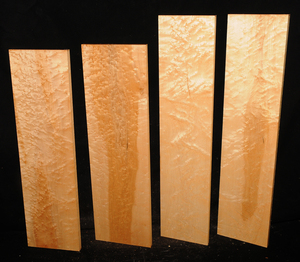
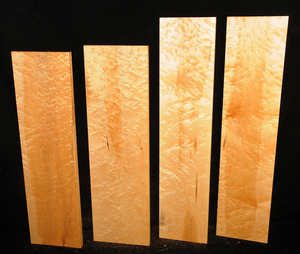
Bird's-eye Maple
Acer saccharum
The heartwood is white or cream to light brown or reddish brown. Figured somewhat like that of burl with many small eyes separate from each other. Hard and heavy, 45 lbs/cu ft. Easy to work and takes a smooth polish. U.S.A.
Item Number: W43692
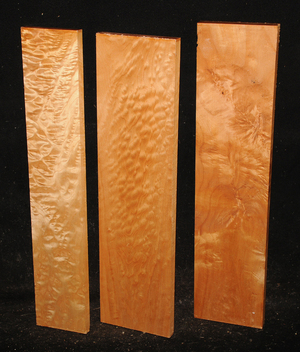
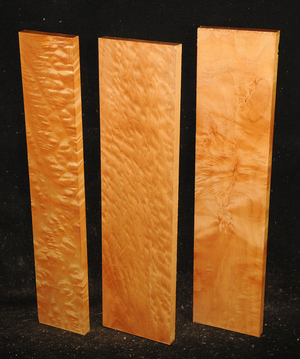
Quilted & Figured Big Leaf Maple
Acer macrophyllum
This tree is native to the Pacific Northwest. It has the distinction of having the largest leaf of the Maples-up to 15" in diameter. This is a soft Maple. The tree can produce many different types of figure, including quilted (tubular, popcorn, & cloud), curly (fiddleback, broken, & basketweave), and burl.
Item Number: W43678
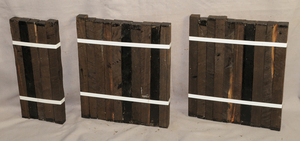
Malagasy Ebony Turning Squares Bundles
Diospyros perreiri
This Ebony is unsurpassed for its beauty and blackness. It is fairly fine-textured and takes a high polish. Finest ebony in the world. Rare.
This species is on the CITES list and as a consequence, we are limiting sales to the United States only.
A has 5 pieces
B & C has 10 pieces each.
Item Number: W43675
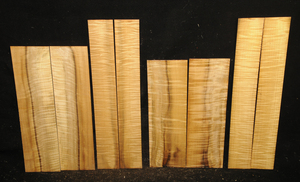
Myrtlewood Ukulele Back & Sides Sets
Umbellularia californica
Also called Pepperwood & Bay Laurel, this is found on the Pacific coast from southwestern Oregon to southern California. It has a fairly fine texture and takes a beautiful polish. Partially air dried.
Item Number: IW37199
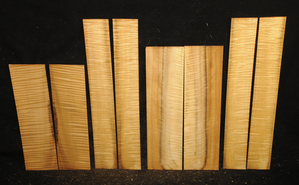
Figured Myrtlewood Ukulele Back & Sides Sets
Umbellularia californica
Also called Pepperwood & Bay Laurel, this is found on the Pacific coast from southwestern Oregon to southern California. It has a fairly fine texture and takes a beautiful polish. Partially air dried.
Item Number: IW37198
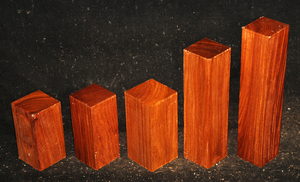
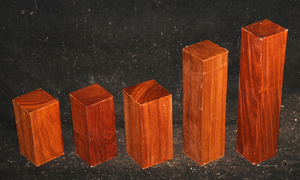
Narra Turning Squares
Pterocarpus indicus
Also called New Guinea Rosewood. It is a beautiful, highly lustrous golden yellow color sometimes with reddish streaks. A nice turning wood it is also used in furniture, jewelry boxes, handles, etc. It is easy to work and glue and takes a nice polish.
Item Number: W43667
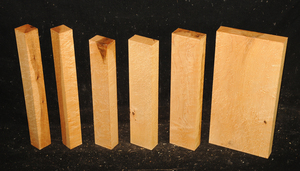
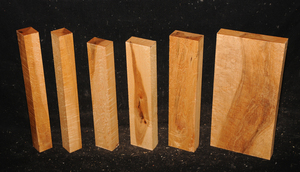
Bird's-eye Maple
Acer saccharum
The heartwood is white or cream to light brown or reddish brown. Figured somewhat like that of burl with many small eyes separate from each other. Hard and heavy, 45 lbs/cu ft. Easy to work and takes a smooth polish. U.S.A.
Item Number: W43665
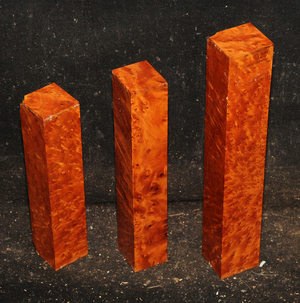
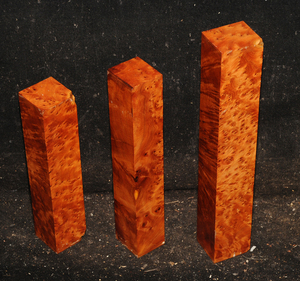
Thuya Burl
Tetraclinis articulata
This comes from the Atlas mountains in Morocco and has a beautiful golden chatoyance. Its color varies from a rich, lustrous golden brown to nearly black. Thuya burl is hard and dense with a high oil content, but tends to be brittle. The eyes, perfectly round, are scattered about in some burls like the figure in bird's-eye maple; in others they are grouped as islands. Due to it's desert occurrence, the wood sometimes contains small defects or inclusions but most can be repaired with cyanoacrylate (super) glues. A rare species, this exquisite wood is used for inlays, small boxes, turnery, and precious objects.
Item Number: W43664
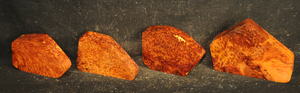

Thuya Burl
Tetraclinis articulata
This comes from the Atlas mountains in Morocco and has a beautiful golden chatoyance. Its color varies from a rich, lustrous golden brown to nearly black. Thuya burl is hard and dense with a high oil content, but tends to be brittle. The eyes, perfectly round, are scattered about in some burls like the figure in bird's-eye maple; in others they are grouped as islands. Due to it's desert occurrence, the wood sometimes contains small defects or inclusions but most can be repaired with cyanoacrylate (super) glues. A rare species, this exquisite wood is used for inlays, small boxes, turnery, and precious objects.
Item Number: W43663
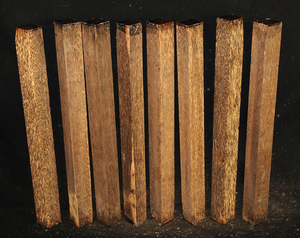
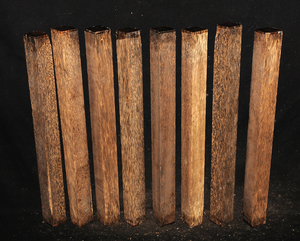
Black Palm Turning Squares
Astrocaryum & Borassus sp.
These are large palms, often up to 70 or 80 feet tall found in Asia, Central America and West Africa. When first felled they are often split into long beams and are used locally for canoes and drums. The wood, especially in older trees, is very hard and durable and consists of numerous fine, black fibers crowded densely together and surrounded by lighter colored, less dense material. The end grain gives the effect of lizard or snake skin. The densest wood is found on the outside of the trees and gets progressively softer towards the middle. Locally it is used for roof beams, bridges, and telephone poles, and is resistant to salt water, termites, and fungi. It takes a fine polish and is used for walking sticks, decorative handles, and boxes.
Item Number: W43660
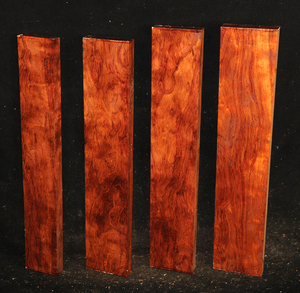
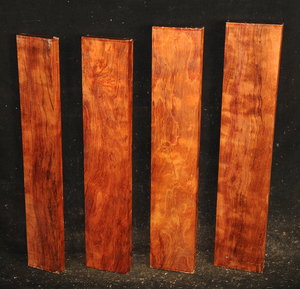
Figured Bubinga
Guibourtia tessmannii
Called by some woodworkers African Rosewood, Bubinga is a deep, lustrous, brownish-red color with a fine, darker striping. The figure makes the wood doubly beautiful. It is very hard and heavy and takes a glassy, smooth finish.
Due to CITES regulations, we can only ship this species to customers in the United States.
Item Number: W43659
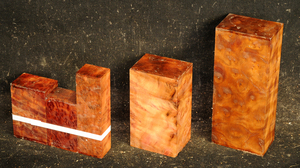
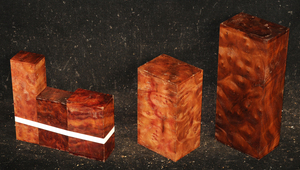
Camphor Burl Bundle & Blocks
Cinnamomum sp.
This rare burl is from S.E. Asia and is seldom seen on the world market. It is fine-grained and varies in color from a light reddish-brown to almost scarlet. It is easy to work and has a very pungent, spicy scent. For a burl it is remarkably stable. Green to partially air dried.
Item Number: W43653
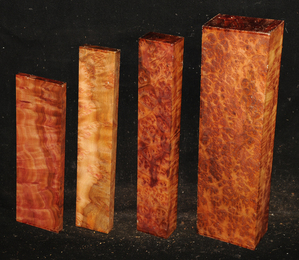
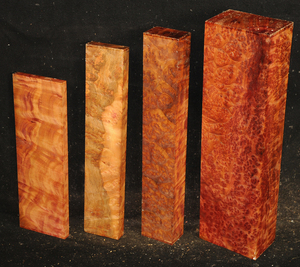
Camphor Burl
Cinnamomum sp.
This rare burl is from S.E. Asia and is seldom seen on the world market. It is fine-grained and varies in color from a light reddish-brown to almost scarlet. It is easy to work and has a very pungent, spicy scent. For a burl it is remarkably stable. Green to partially air dried.
Item Number: W43650
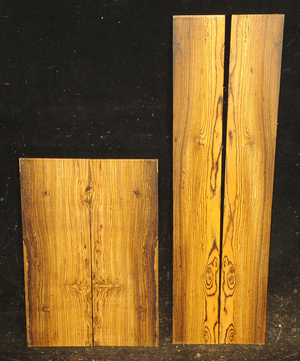
Mexican Bocote Ukulele Back & Sides Set
Cordia elaeagnoides
Bocote is an oily wood with a yellowish to dark brown color accented with irregular black stripes and streaks. It has a spicy smell and is hard, heavy and strong. It is easy to work and takes a very nice polish. This beautiful wood is seldom seen in woodworker's shops.
Item Number: IW37192
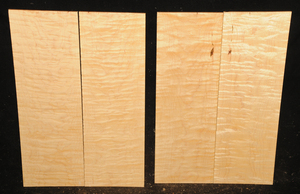
Figured Hard Maple Lam Top Guitar Sets
Acer saccharum
The heartwood is white or cream to light brown or reddish brown. Because of the generally small size of available logs, most sawmills produce flatsawn boards which will show a broken curl on the surface and a fiddleback curl on the quartersawn edge. Hard and heavy, 45 lbs/cu ft. Easy to work and takes a smooth polish. U.S.A.
Item Number: IW37185
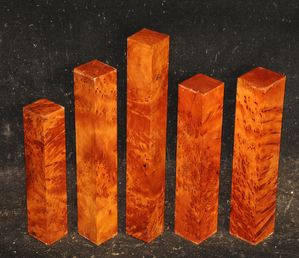
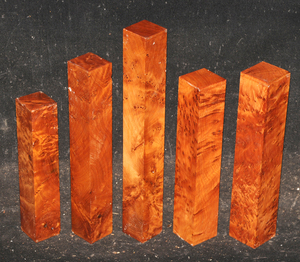
Thuya Burl Turning Squares
Tetraclinis articulata
This comes from the Atlas mountains in Morocco and has a beautiful golden chatoyance. Its color varies from a rich, lustrous golden brown to nearly black. Thuya burl is hard and dense with a high oil content, but tends to be brittle. The eyes, perfectly round, are scattered about in some burls like the figure in bird's-eye maple; in others they are grouped as islands. Due to it's desert occurrence, the wood sometimes contains small defects or inclusions but most can be repaired with cyanoacrylate (super) glues. A rare species, this exquisite wood is used for inlays, small boxes, turnery, and precious objects.
Item Number: W43634
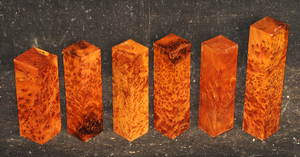
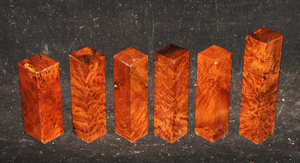
Thuya Burl Turning Squares
Tetraclinis articulata
This comes from the Atlas mountains in Morocco and has a beautiful golden chatoyance. Its color varies from a rich, lustrous golden brown to nearly black. Thuya burl is hard and dense with a high oil content, but tends to be brittle. The eyes, perfectly round, are scattered about in some burls like the figure in bird's-eye maple; in others they are grouped as islands. Due to it's desert occurrence, the wood sometimes contains small defects or inclusions but most can be repaired with cyanoacrylate (super) glues. A rare species, this exquisite wood is used for inlays, small boxes, turnery, and precious objects.
Item Number: W43633
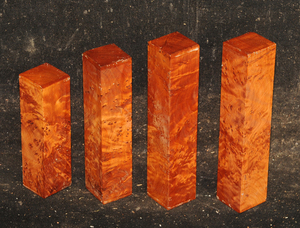
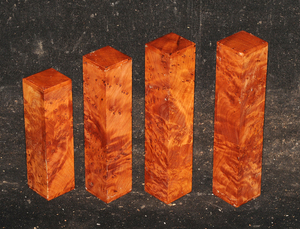
Thuya Burl Turning Squares
Tetraclinis articulata
This comes from the Atlas mountains in Morocco and has a beautiful golden chatoyance. Its color varies from a rich, lustrous golden brown to nearly black. Thuya burl is hard and dense with a high oil content, but tends to be brittle. The eyes, perfectly round, are scattered about in some burls like the figure in bird's-eye maple; in others they are grouped as islands. Due to it's desert occurrence, the wood sometimes contains small defects or inclusions but most can be repaired with cyanoacrylate (super) glues. A rare species, this exquisite wood is used for inlays, small boxes, turnery, and precious objects.
Item Number: W43632
African Padouk
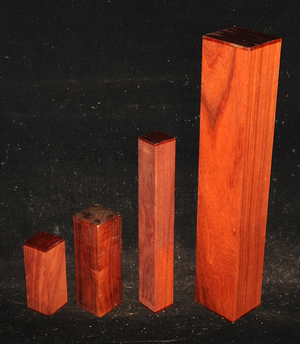
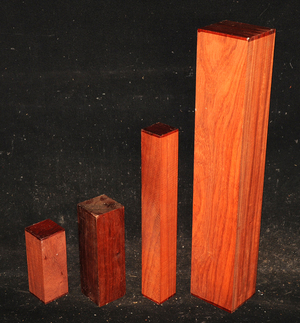
Pterocarpus soyauxii
This brick-red colored West African hardwood was once one of the more common imported hardwoods but has become increasingly scarce in the last couple of years. It is easy to work, takes a nice polish and is dimensionally stable.
Item Number: W43630
West African Ebony Turning Squares
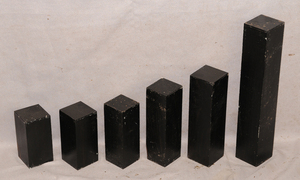
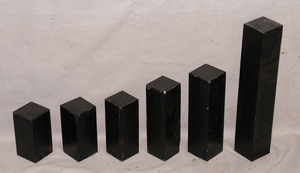
Diospyros crassiflora
Sometimes called Gabon or Gaboon, this Ebony is sometimes jet black but oftentimes has grayish streaks that mostly disappear when finished or after the made object has been put into service. This Ebony has a marked resistance to checking that is characteristic of some of the Indian and Asian species. It has a wonderful texture and is easily carved, planed, turned, and milled. It is fairly fine-grained and takes a high polish. This Ebony usually originates in either Cameroon or Nigeria and the logs are rough hewn in the forest and oftentimes brought to the nearest road by human porters. With the disappearance of other species of black Ebony this species is fast becoming the Ebony of choice.
Item Number: W43627
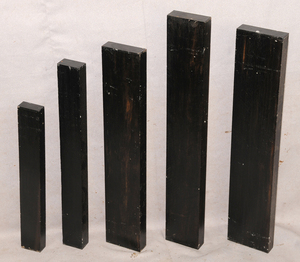
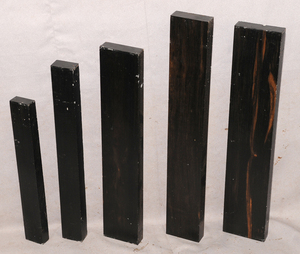
West African Ebony
Diospyros crassiflora
Sometimes called Gabon or Gaboon, this Ebony is sometimes jet black but oftentimes has grayish streaks that mostly disappear when finished or after the made object has been put into service. This Ebony has a marked resistance to checking that is characteristic of some of the Indian and Asian species. It has a wonderful texture and is easily carved, planed, turned, and milled. It is fairly fine-grained and takes a high polish. This Ebony usually originates in either Cameroon or Nigeria and the logs are rough hewn in the forest and oftentimes brought to the nearest road by human porters. With the disappearance of other species of black Ebony this species is fast becoming the Ebony of choice.
Item Number: W43623
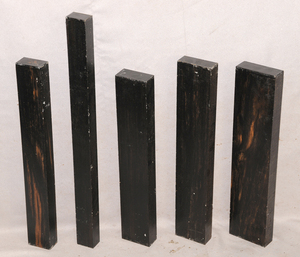
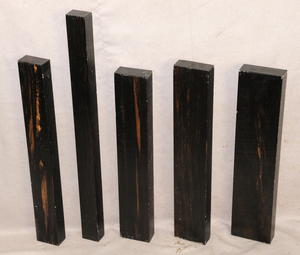
West African Ebony
Diospyros crassiflora
Sometimes called Gabon or Gaboon, this Ebony is sometimes jet black but oftentimes has grayish streaks that mostly disappear when finished or after the made object has been put into service. This Ebony has a marked resistance to checking that is characteristic of some of the Indian and Asian species. It has a wonderful texture and is easily carved, planed, turned, and milled. It is fairly fine-grained and takes a high polish. This Ebony usually originates in either Cameroon or Nigeria and the logs are rough hewn in the forest and oftentimes brought to the nearest road by human porters. With the disappearance of other species of black Ebony this species is fast becoming the Ebony of choice.
Item Number: W43622
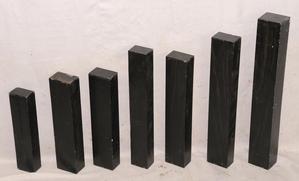
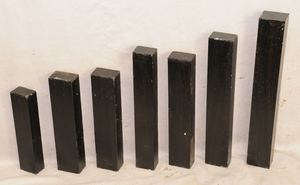
West African Ebony
Diospyros crassiflora
Sometimes called Gabon or Gaboon, this Ebony is sometimes jet black but oftentimes has grayish streaks that mostly disappear when finished or after the made object has been put into service. This Ebony has a marked resistance to checking that is characteristic of some of the Indian and Asian species. It has a wonderful texture and is easily carved, planed, turned, and milled. It is fairly fine-grained and takes a high polish. This Ebony usually originates in either Cameroon or Nigeria and the logs are rough hewn in the forest and oftentimes brought to the nearest road by human porters. With the disappearance of other species of black Ebony this species is fast becoming the Ebony of choice.
Item Number: W43621
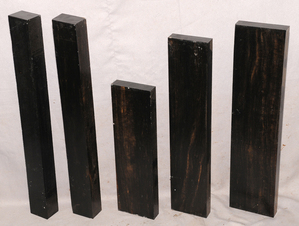
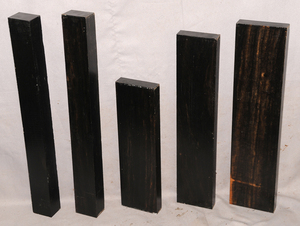
West African Ebony
Diospyros crassiflora
Sometimes called Gabon or Gaboon, this Ebony is sometimes jet black but oftentimes has grayish streaks that mostly disappear when finished or after the made object has been put into service. This Ebony has a marked resistance to checking that is characteristic of some of the Indian and Asian species. It has a wonderful texture and is easily carved, planed, turned, and milled. It is fairly fine-grained and takes a high polish. This Ebony usually originates in either Cameroon or Nigeria and the logs are rough hewn in the forest and oftentimes brought to the nearest road by human porters. With the disappearance of other species of black Ebony this species is fast becoming the Ebony of choice.
Item Number: W43619
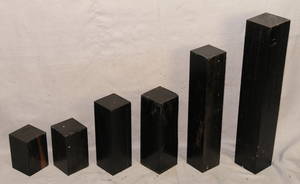
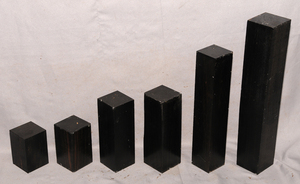
West African Ebony Turning Squares
Diospyros crassiflora
Sometimes called Gabon or Gaboon, this Ebony is sometimes jet black but oftentimes has grayish streaks that mostly disappear when finished or after the made object has been put into service. This Ebony has a marked resistance to checking that is characteristic of some of the Indian and Asian species. It has a wonderful texture and is easily carved, planed, turned, and milled. It is fairly fine-grained and takes a high polish. This Ebony usually originates in either Cameroon or Nigeria and the logs are rough hewn in the forest and oftentimes brought to the nearest road by human porters. With the disappearance of other species of black Ebony this species is fast becoming the Ebony of choice.
Item Number: W43614
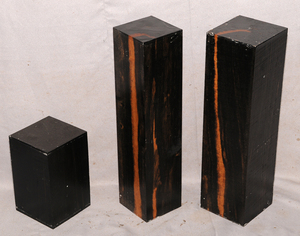
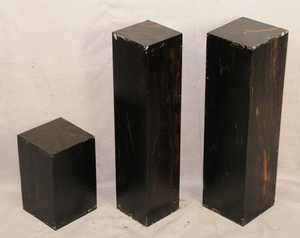
West African Ebony Turning Squares
Diospyros crassiflora
Sometimes called Gabon or Gaboon, this Ebony is sometimes jet black but oftentimes has grayish streaks that mostly disappear when finished or after the made object has been put into service. This Ebony has a marked resistance to checking that is characteristic of some of the Indian and Asian species. It has a wonderful texture and is easily carved, planed, turned, and milled. It is fairly fine-grained and takes a high polish. This Ebony usually originates in either Cameroon or Nigeria and the logs are rough hewn in the forest and oftentimes brought to the nearest road by human porters. With the disappearance of other species of black Ebony this species is fast becoming the Ebony of choice.
Item Number: W43613
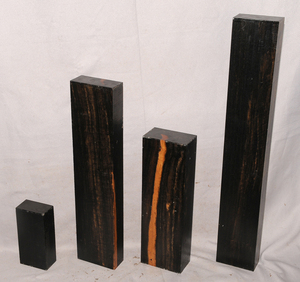
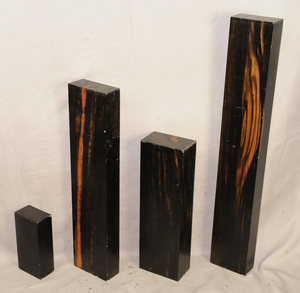
West African Ebony
Diospyros crassiflora
Sometimes called Gabon or Gaboon, this Ebony is sometimes jet black but oftentimes has grayish streaks that mostly disappear when finished or after the made object has been put into service. This Ebony has a marked resistance to checking that is characteristic of some of the Indian and Asian species. It has a wonderful texture and is easily carved, planed, turned, and milled. It is fairly fine-grained and takes a high polish. This Ebony usually originates in either Cameroon or Nigeria and the logs are rough hewn in the forest and oftentimes brought to the nearest road by human porters. With the disappearance of other species of black Ebony this species is fast becoming the Ebony of choice.
Item Number: W43611
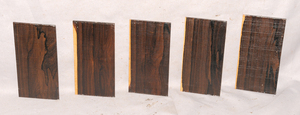
Ziricote Guitar Peghead Veneers
Cordia dodecandra
Ziricote is another timber we get from the Yucatan Peninsula of Mexico. It is a lovely wood with a very pronounced ray fleck on radial surfaces sometimes producing a "landscape" effect much like picture jasper.
Item Number: IW37170
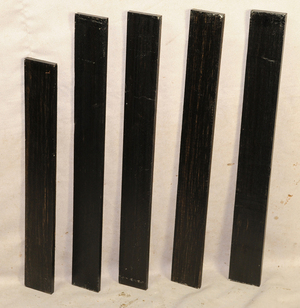
West African Ebony Ukulele/Mandolin Finger Boards
Diospyros crassiflora
Sometimes called Gabon or Gaboon, this Ebony is sometimes jet black but oftentimes has grayish streaks that mostly disappear when finished or after the made object has been put into service. This Ebony has a marked resistance to checking that is characteristic of some of the Indian and Asian species. It has a wonderful texture and is easily carved, planed, turned, and milled. It is fairly fine-grained and takes a high polish. This Ebony usually originates in either Cameroon or Nigeria and the logs are rough hewn in the forest and oftentimes brought to the nearest road by human porters. With the disappearance of other species of black Ebony this species is fast becoming the Ebony of choice.
Item Number: IW37161
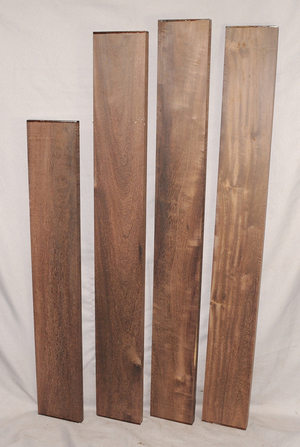
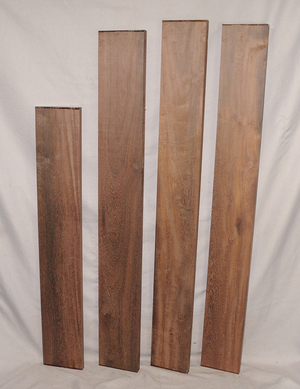
Katalox
Swartzia cubensis
This is a large tree 2-4' diameter, by up to 120' tall from Mexico & Central America. The wood is very dense and fairly fine-grained. Because of its hardness it can be difficult to work but it takes a fine polish. Its dark color leads some to call it Mexican Ebano and very dark pieces can be used as a substitute for true black Ebony, especially in laminations and inlays. Straight-grained wood can be used for musical instrument fingerboards and bridge blanks.
Item Number: W43607
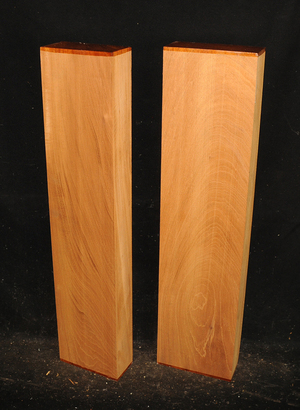
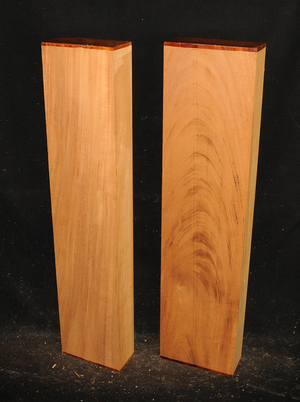
Genuine Mahogany
Swietenia macrophylla
Also called Acajou, Tropical American Mahogany, and Honduras Mahogany. This medium to large tree occurs throughout Central and South America. Related to Cuban Mahogany (Swietenia mahogani) and Pacific Coast Mahogany (Swietenia humilis). It produces one of the classic furniture and cabinetmaking woods. The heartwood varies from a light reddish-brown to a rich, dark red. Generally straight grained and exceptionally stable, it is easy to machine, hand plane, sand and finish. Occasional logs produce several figures, curly, quilted, and the rare plum pudding figure which looks like large drips running down the board. Used in fine furniture and joinery, boat building, and in the guitar industry for acoustic sets and necks.
Due to CITES regulations, we can only ship this species to customers in the United States.
Item Number: W43606
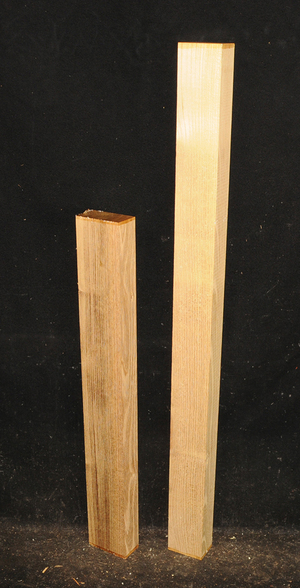
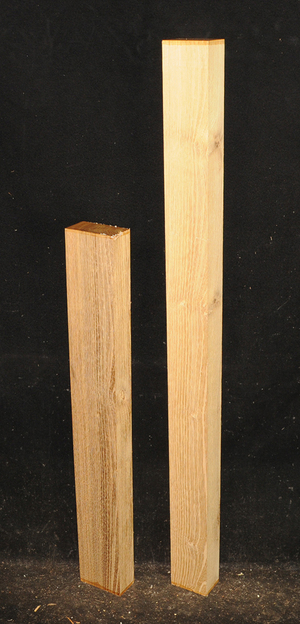
Black Locust
Item Number: W43605
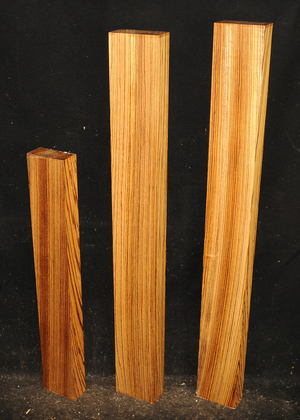
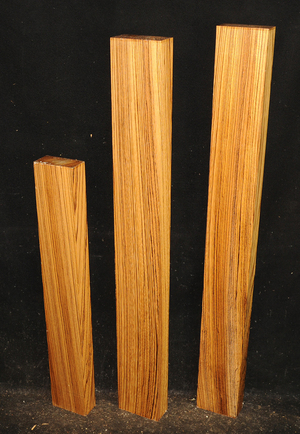
Zebrawood
Microberlinia brazzavillensis
This striped wood develops a beautiful golden patina as it ages.
Item Number: W43604
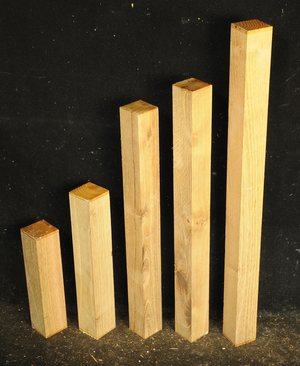
Black Locust Turning Squares
Item Number: W43598
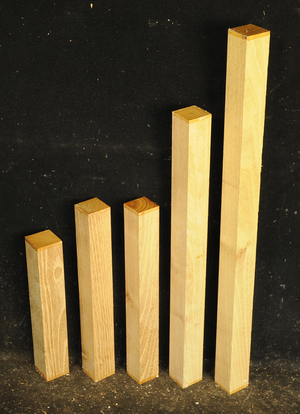
Black Locust Turning Squares
Item Number: W43597
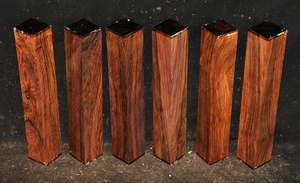
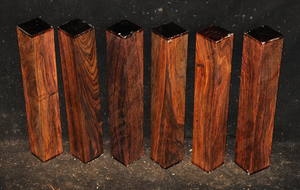
Mexican Cocobolo Turning Squares
Dalbergia retusa
The wood is very oily which makes it difficult to glue but on the plus side the oiliness makes it easy to produce a fantastic polish on finished pieces. Wear a respirator mask when working Cocobolo as the dust can produce asthma-like reactions. Cocobolo is a small to medium sized tree and is found mainly in Mexico, Costa Rica, Nicaragua, and Panama.
Due to CITES regulations, we can only ship this species to customers in the United States.
Item Number: W43591
Castello Boxwood
Calycophyllum multiflorum
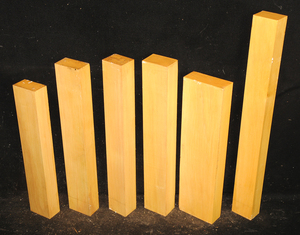
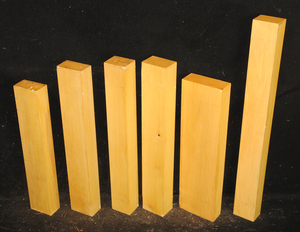
Castello Boxwood, though not a true Buxus species, still has a very fine texture and a lovely light canary yellow color. This is truly a dream wood to mill.It is an excellent turnery wood, capable of very fine detail. Also very popular for making scale timbers and other parts for model ships. Air-dried.
Item Number: W43587
Amazon Rosewood Guitar Finger Boards
Dalbergia spruceana
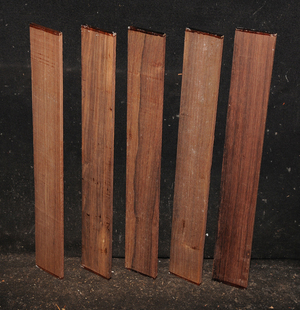
This is a fairly rare species from the Amazon region of Brazil. The heartwood varies from a golden-brown to a reddish-brown often with narrow, dark stripes. It is hard and heavy, but easy to work, and takes a high polish.
Due to CITES regulations, we can only ship this species to customers in the United States.
Item Number: IW37151
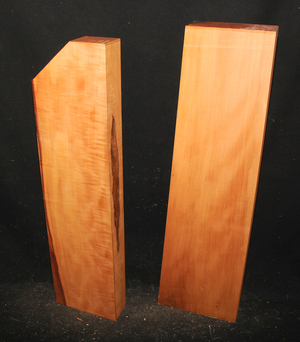
Figured European Pearwood
Pyrus communis
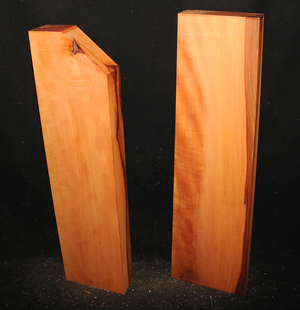
Almost all Pearwood imported into the U.S.A. has been steamed to bring out a more pinkish-red color and to prevent drying stresses. Formerly the wood was used for carving, turning, drawing instruments, wood engravings, textile printing blocks, and tool handles. Stained black it is an excellent substitute for Ebony. Contemporary uses include woodwinds such as recorders, furniture, kitchen accessories, jewelry and other boxes, and architectural uses such as paneling and doors.
These were all cut from 30 year old stock.
Item Number: W43584
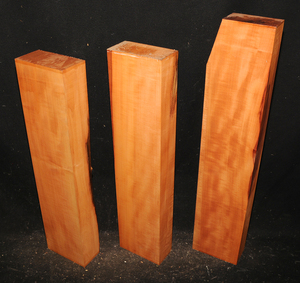
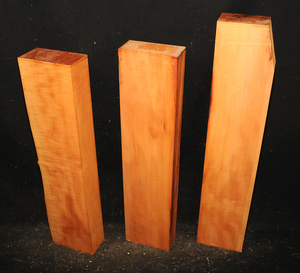
Figured European Pearwood
Pyrus communis
Almost all Pearwood imported into the U.S.A. has been steamed to bring out a more pinkish-red color and to prevent drying stresses. Formerly the wood was used for carving, turning, drawing instruments, wood engravings, textile printing blocks, and tool handles. Stained black it is an excellent substitute for Ebony. Contemporary uses include woodwinds such as recorders, furniture, kitchen accessories, jewelry and other boxes, and architectural uses such as paneling and doors.
These were all cut from 30 year old stock.
Item Number: W43583
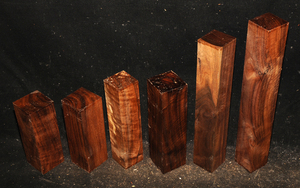
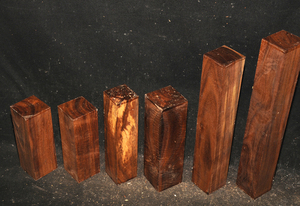
Figured Claro Walnut
Juglans hindsii
A tree found in Southern Oregon and Northern California with the best material coming from the San Joaquin Valley. Lighter in color than Eastern Black Walnut (Juglans regia) it is often found with curly and quilted figure. Burly stumps are also a valuable source of wood for veneers, gunstocks, and wood turning blanks.
E is plain, no figure.
Item Number: W43580
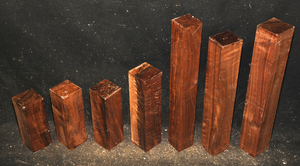
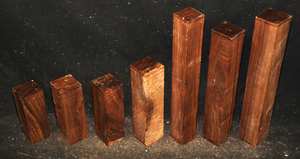
Figured Claro Walnut
Juglans hindsii
A tree found in Southern Oregon and Northern California with the best material coming from the San Joaquin Valley. Lighter in color than Eastern Black Walnut (Juglans regia) it is often found with curly and quilted figure. Burly stumps are also a valuable source of wood for veneers, gunstocks, and wood turning blanks.
Item Number: W43579
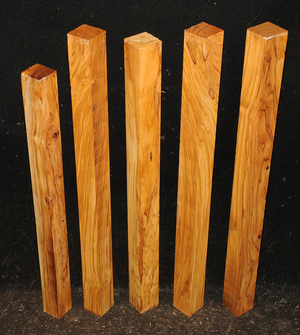
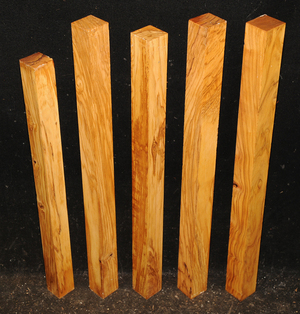
Mediterranean Olivewood Turning Squares
Olea europa
A wood of biblical importance, no wood is more closely associated with history and the development of civilization than Olivewood. A beautifully variegated timber. Partially air-dried.
A has some small, loose knots.
Item Number: W43574
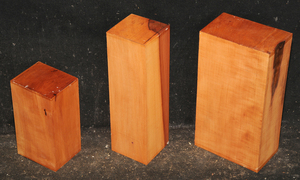
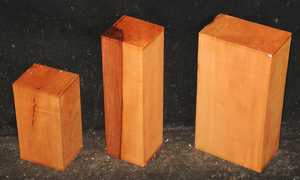
European Pearwood
Pyrus communis
One of several rosewood species from Madagascar. It has beautiful color and grain, a sweet smell, and is very easy to work and stable in use. It is a very close match to true Rio or Brazilian Rosewood (Dalbergia nigra) and as such is much in demand for musical instruments, especially guitars.
Due to this item being on the CITES list, we are only shipping this species to addresses in the United States.
Item Number: W43564
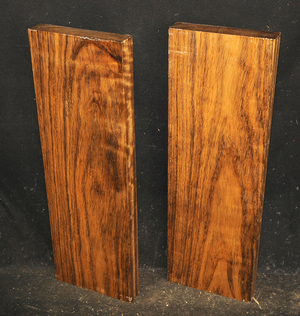
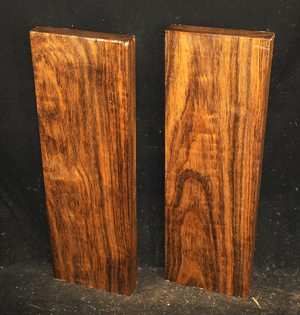
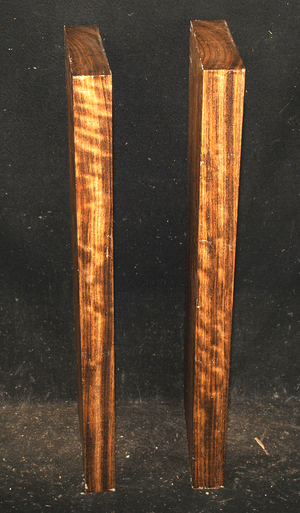
Figured Shedua
Guibourtia sp.
Also called Ovangkol and Amazakoue. This wood is increasingly becoming popular as an acoustic guitar wood. The color varies from a rich, golden brown to a lustrous grayish brown usually with a black stripe.
Item Number: W43561
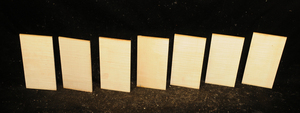
Curly European Sycamore Guitar Peghead Veneers
Acer pseudoplatanus
This European Maple is native to central Europe and west Asia. It is a tough, white or cream colored, fine-grained timber. It reminds me of vanilla ice cream because it is so even-colored. It works well in any grain direction. It is used for musical instruments, furniture, cabinetry, and because it is non-staining it is used for kitchen utensils, wooden spoons, rolling pins, and cutting boards. The figure is fiddleback on the quartersawn surface and more of a broken curl on the flatsawn surface. Select, quartersawn material is used for violin backs and sides and necks. Dry.
Item Number: IW37145
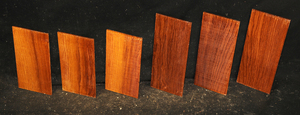
Guatemalan Rosewood Guitar Peghead Veneers
Dalbergia tucarensis
This Rosewood species has a reddish-brown to dark brown colored heartwood contrasting the almost white sapwood. The dust has a sweet odor. It is an excellent furniture/case works/jewelry box wood and even though it has a medium texture it does take a nice polish. We also offer it as a musical instrument wood (see guitar fingerboards and backs & sides elsewhere on the site). It has a very "crisp" tap tone with good sustain.
Due to CITES regulations, we can only ship this species to customers in the United States.
Item Number: IW37143
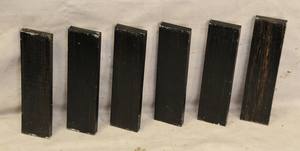
West African Ebony Guitar Bridge Blanks
Diospyros crassiflora
Sometimes called Gabon or Gaboon, this Ebony is sometimes jet black but oftentimes has grayish streaks that mostly disappear when finished or after the made object has been put into service. This Ebony has a marked resistance to checking that is characteristic of some of the Indian and Asian species. It has a wonderful texture and is easily carved, planed, turned, and milled. It is fairly fine-grained and takes a high polish. This Ebony usually originates in either Cameroon or Nigeria and the logs are rough hewn in the forest and oftentimes brought to the nearest road by human porters. With the disappearance of other species of black Ebony this species is fast becoming the Ebony of choice.
Item Number: IW37142
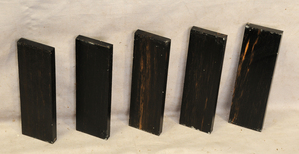
West African Ebony Guitar Bridge Blanks
Diospyros crassiflora
Sometimes called Gabon or Gaboon, this Ebony is sometimes jet black but oftentimes has grayish streaks that mostly disappear when finished or after the made object has been put into service. This Ebony has a marked resistance to checking that is characteristic of some of the Indian and Asian species. It has a wonderful texture and is easily carved, planed, turned, and milled. It is fairly fine-grained and takes a high polish. This Ebony usually originates in either Cameroon or Nigeria and the logs are rough hewn in the forest and oftentimes brought to the nearest road by human porters. With the disappearance of other species of black Ebony this species is fast becoming the Ebony of choice.
Item Number: IW37141